
The Great Taking – What is it and How Can You Stop It?
The Great Taking is a book by David Rogers Webb that discusses a controversial theory about a potential large-scale financial event that he calls ‘the end game of the current globally synchronous debt accumulation super cycle”.
Webb draws on his experience in finance, including managing hedge funds and working with large institutional investors to deliver a jaw-dropping, behind the curtain expose of the mechanisms of global finance.
The author focuses on the following five key points in his book:
- It explores the concept of a massive taking of collateral, which Webb claims is part of a planned scheme at the end of a global debt accumulation cycle.
- The book suggests that this “taking” would involve the seizure of various financial assets, including bank deposits, stocks, bonds, and the underlying property of public corporations.
- Webb argues that privately owned personal and real property financed with debt, as well as assets of debt-financed private businesses, could also be affected.
- The author presents the idea that a small group of people controlling central banks and money creation are behind this alleged plan.
- The book appears to link these ideas to the potential implementation of Central Bank Digital Currencies (CBDCs).
David Rogers Webb, the author of The Great Taking wants to share the information of what he has discovered with the widest audience possible so individuals, companies and even countries can take the appropriate action to mitigate themselves from The Great Taking before it happens.
You can also get a free download of The Great Taking book PDF using the button below. Paperback and hardback copies are also available on Amazon.

What is The Great Taking?
“The Great Taking” is a term used to describe a large-scale, covert effort by powerful global entities to seize private property and assets from ordinary citizens.
This theory often suggests that governments, multinational corporations, and financial institutions are collaborating to strip away individual ownership and control, consolidating wealth and power into the hands of a few. “You’ll own nothing, and be happy” ring a bell?
Proponents of this idea argue that through mechanisms like eminent domain, excessive taxation, restrictive regulations, and economic policies, the ruling elite ( I hate that term, let’s call them what they are – parasitic class) are systematically eroding personal freedoms and property rights.
They often cite historical precedents, perceived overreach in policy decisions, and various socio-economic trends as evidence supporting their claims.
The Debt Cycle – The End in Nigh
The concept of a massive taking of collateral at the end of a global debt accumulation cycle is a central theme in Webb’s book. Here’s what this scenario looks like:
Global Debt Cycle: Webb argues that the world is at the end of a long-term debt cycle. This cycle is characterised by decades of increasing debt levels across governments, corporations, and individuals.
Collateral: In finance, collateral refers to assets that borrowers pledge to lenders as security for loans. If the borrower defaults, the lender can seize the collateral.
The “Taking”: Webb suggests that there’s a plan for a large-scale seizure of this collateral. This would be an unprecedented event where vast amounts of assets pledged as collateral would be claimed by lenders or financial institutions.
Planned Scheme: The author contends that this isn’t a random event but a carefully orchestrated plan by powerful financial entities.
Economic Impact: Such a massive “taking” would potentially lead to a significant redistribution of wealth and a restructuring of the global financial system.
Timing: Webb links this event to the end of the debt cycle, suggesting that when debt levels become unsustainable, this “taking” will be triggered.
How They Plan to Take it All

In The Great Taking, the seizure of assets like bank deposits, stocks, bonds, and property of public corporations would potentially occur through the following mechanisms:
Legal framework: Webb argues that changes in financial regulations and laws over the past decades have created a legal basis for this seizure. He claims that the dematerialisation of securities and the creation of “security entitlements” have altered property rights
Collateral claims: In the event of a financial crisis or systemic failure, secured creditors would have priority claim over investors’ assets that have been pledged as trade collateral. This could happen if asset custodians go bankrupt.
Central Clearing Parties (CCPs): Entities like the DTCC in the US, which assume risk in trades, could play a role. Webb suggests that global financial regulators are aware that CCPs lack sufficient capital to withstand a systemic risk event.
Bank Holidays: Webb draws parallels to historical events, such as the banking holiday of March 1933, suggesting that a similar emergency measure could be employed to reorganise financial assets and debts while denying people access to their accounts.
Derivatives: Webb mentions a “Derivatives Time Bomb” as a potential mechanism for asset seizure, particularly affecting wealthy individuals with assets in large financial institutions.
Central Bank Digital Currencies (CBDCs): Webb sees the implementation of CBDCs as a potential tool that could give central bankers ultimate control over financial assets
Let’s delve deeper into the concerns how privately owned personal and real property financed with debt, as well as assets of debt-financed private businesses, could potentially be affected:
Debt-financed assets: Webb argues that any property or asset purchased using borrowed money could be at risk. This includes:
-
- Homes with mortgages
- Cars bought on finance
- Business equipment acquired through loans
- Commercial real estate with outstanding loans
Mechanism of seizure: According to Webb, in a severe financial crisis, lenders might claim these assets if borrowers default or if the financial system undergoes a major restructuring.
Small businesses: Webb suggests that privately-owned businesses that have taken on debt could see their assets seized by creditors in such a scenario.
Chain reaction: The author posits that if large financial institutions face trouble, it could trigger a domino effect, impacting smaller lenders and eventually reaching individual borrowers.
Legal Framework: Webb claims that changes in financial laws and regulations have made it easier for creditors to claim assets in times of financial stress.
Widespread Impact: This scenario would affect a broad swath of society, not just wealthy individuals or large corporations.
Economic Consequences: Such widespread asset seizures could lead to significant wealth redistribution and potentially alter patterns of ownership in society.
Who is Behind the Great Taking?
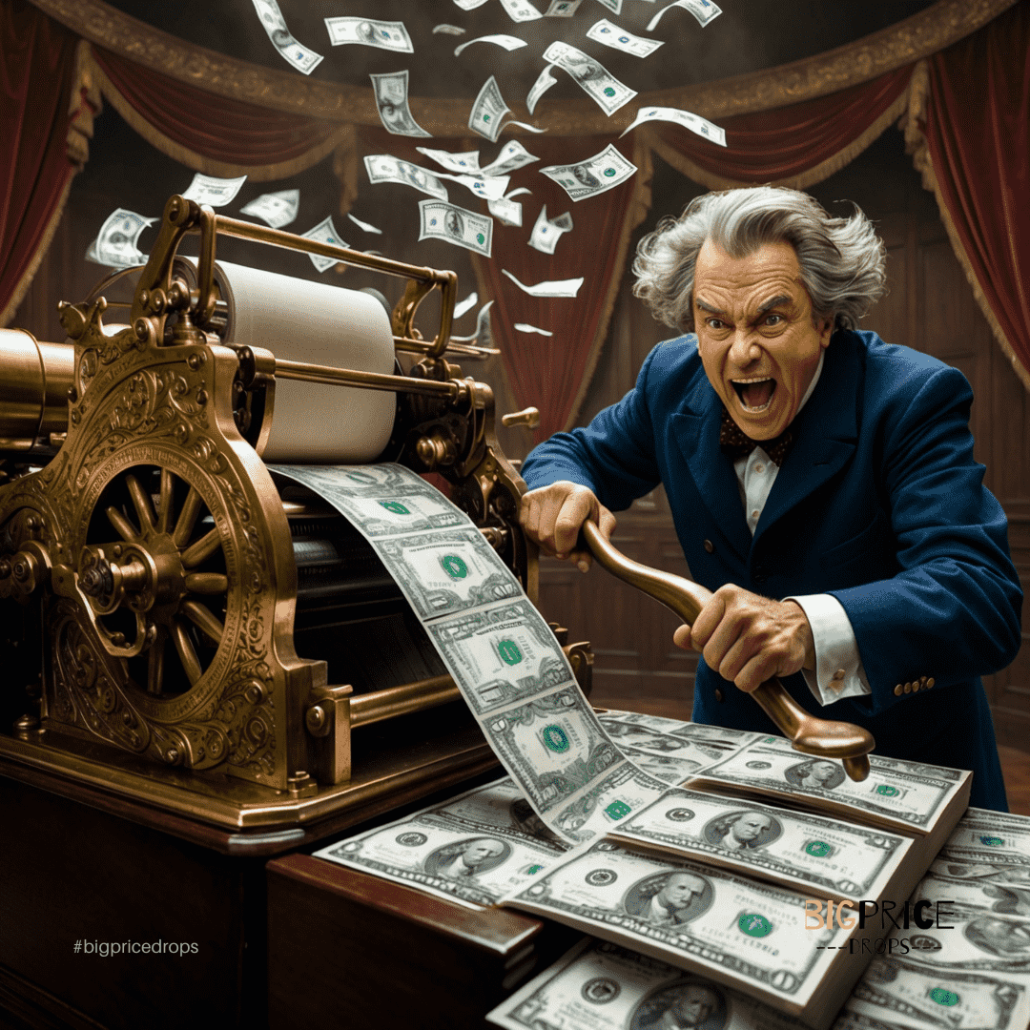
In The Great Taking, David Rogers Webb suggests that a small group of people controlling central banks and money creation are behind the alleged plan for a massive taking of collateral.
While Webb makes this claim, it’s important to approach it critically and understand that this is a controversial theory not supported by mainstream economic thought, which for those paying attention, isn’t a great revelation.
Central Banks: Webb likely refers to the leadership of major central banks, such as the Federal Reserve, European Central Bank, Bank of Japan, and others. These central banks are likely controlled by The Bank of International Settlements (BIS) AKA the central bank of central banks, International Monetary Fund (IMF) and the World Bank amongst others. These institutions are typically led by appointed officials and boards.
Money Creation: Central banks have the unique ability to influence the money supply through various monetary policy tools, including setting interest rates, open market operations, and quantitative easing. That’s counterfeiting to you and me!
Global Coordination: Webb’s theory may imply that there’s coordination among these central bank leaders across different countries.
Financial ‘Elites’: The author might also be referring to influential figures in the global financial system, including heads of large financial institutions, policy makers, World Economic Forum (WEF), World Trade Organization (WTO) and wealthy individuals with significant economic influence.
Lack of Transparency: Webb’s theory suggests that the decisions and plans of this group are not fully transparent to the public.
Long-term Planning: The author implies that this group has been planning this “taking” over an extended period, possibly aligning with long-term economic cycles and family precedence.
Motivations: Webb’s theory likely attributes motives of power consolidation and wealth concentration to this group.
Bank Runs, Bullion, and Bitcoin: Safeguarding Your Wealth in Uncertain Times
CBDC’s – One Coin to Control and Enslave Us All
The implementation of Central Bank Digital Currencies (CBDCs) is seen as a potential tool that could give central bankers ultimate control over financial assets.
Direct Control: Webb argues that CBDCs would allow central banks to have direct control over the money supply and individual transactions, unlike the current system where commercial banks act as intermediaries
Programmable Money: CBDCs could be programmed with specific rules or conditions, potentially allowing central banks to control how and when money is spent
Financial Surveillance: The digital nature of CBDCs could enable unprecedented levels of financial surveillance, tracking and taxing every transaction in real-time
Asset Seizure: Webb suggests that CBDCs could make it easier for authorities to freeze or seize assets without going through traditional legal channels.
Monetary Policy Implementation: CBDCs could allow for more direct and immediate implementation of monetary policies, such as negative interest rates or targeted stimulus
Elimination of Cash: The introduction of CBDCs could potentially lead to the phasing out of physical cash, removing the last bastion of financial privacy, anonymity and freedom
Global Coordination: Webb implies that the implementation of CBDCs across different countries could facilitate a coordinated global financial system under centralised control.
Threat to Freedom: Webb argues that this level of control through CBDCs threatens individual freedoms and liberties, not just financial investments.

In Summary
The Great Taking reflects broader anxieties about economic security, personal freedoms, and trust in institutions. It underscores the need for transparency, accountability, and equitable policies in addressing the challenges faced by contemporary society.
While the book covers some heavy concepts, the concluding chapter does offer some hope. David Rogers Webb thinks, and I would agree that the Covaids plandemic revealed how the parasitical class may have overplayed their hand. In his opinion the financial, big tech, big pharma, big government, lame street media and medical industrial complex pushed too hard, too fast and caused many people to wake up and start questioning the ‘experts’ and their ‘authority’.
However, please realise that if you owe a bank, mortgage or credit card company any money, you are at risk of losing your assets, all of them!
If you have money in the bank, you might not be able to get it, think Cyprus, Greece, Venezuela etc.
The lesson is simple: get out of debt, avoid counterparty risk, hold physical, debt free assets like precious metals, Bitcoin and land, and pray that the world avoids the globalist-Bolsheviks plans to dominate everything and enslave everyone.
Read the book, watch the documentary, but don’t despair, prepare.
Watch The Great Taking Documentary here:
Watch David Rogers Webb on How to Stop The Great Taking.
The Great Taking – What is it and How Can You Stop It?

Perry Stevens is the founder of BIGPriceDrops and a long-time digital marketer with a practical interest in helping UK shoppers find better value online. He focuses on clear, no-nonsense money-saving content, Amazon UK deal insights, and buyer guides that help readers spot genuine savings without falling for misleading discounts or impulse-buy traps.
When he is not working on BIGPriceDrops, Perry runs Blend Local Search Marketing and works on digital projects covering SEO, AI tools, and online business growth. His approach is simple: help people make smarter decisions before they spend their money.


Leave a Reply
Want to join the discussion?Feel free to contribute!