
Does a Hybrid Car Save Money? Everything You Need to Know
Does driving a hybrid car genuinely save you money? This is a question commonly asked by potential car buyers, and in this article, we’ll dive deep into the cost-benefit analysis of owning a hybrid car. The goal is to uncover the truth and give a clear picture of the real costs and potential savings associated with hybrid cars.
“A penny saved is a penny earned.” – Benjamin Franklin
It’s easy to look at the higher upfront cost of a hybrid vehicle compared to a conventional car and disregard the possibility of future savings. But, the saying by Ben Franklin applies quite fittingly here. If a hybrid car’s operation and maintenance cost less over its lifetime, then every penny you save is indeed a penny earned. So, let’s dissect this penny-wise scenario with the hybrid car, shall we?
- Fuel Efficiency: Hybrid cars typically have better gas mileage, saving money at the pump.
- Maintenance and Repair: Hybrid cars generally require less frequent maintenance and have fewer major repairs.
- Depreciation: While hybrid cars might depreciate differently than conventional vehicles, certain models retain value quite well.
- Tax Benefits: Many jurisdictions offer tax credits or incentives for owning a hybrid car.
By separating the elements that contribute to total car ownership costs, we are better equipped to stack hybrid cars against their conventional counterparts. At the end of the day, the answer to whether a hybrid car saves money is dependent on numerous factors, from your daily commute to the specific hybrid model. Let’s alter the way we view hybrid cars from a simple one-time purchase to a long-term investment, and examine whether they indeed offer value for your money in the next sections.

What is a Hybrid Car?
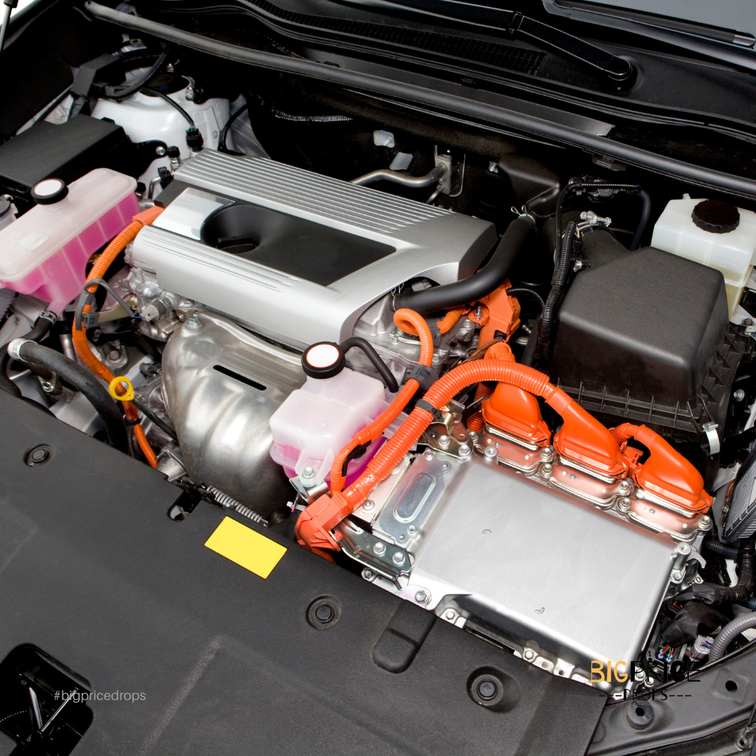
There are cars with a petrol or diesel engine and then the electric range; the hybrid system integrates parts of both. They aren’t pure electric vehicles, nor entirely dependent on petrol stations, hence “hybrid.”
What are the benefits of hybrid cars?
For many people, the biggest advantage is that going hybrid is better for the environment. In reality, although a hybrid car uses less ‘fossil’ fuel it still has to be plugged into an energy source that burns fossil fuel miles away, out of mind and out of site. Other than glossing over that fact, you can choose between a plug-in hybrid and a parallel one. Plug-in hybrids will rely on the electric motor by default. But the parallel option will balance both engines simultaneously or independently.
Hybrid cars recharge through regenerative braking; this works because every time you hit the brakes, the kinetic energy will be converted to power, thanks to the combustion engine. So the electric motor won’t ever be running costs up.
And, since manufacturers are working with a dual-engine model, many parts aren’t needed for hybrids. So because of that, wear and tear are minimised a great deal. Maintenance costs will not be a recurring issue although because of the excess weight of PHEV’s, the cost of tyre wear and tear is an additional hidden cost few take in to account. The shift from the conventional engine means that hybrids also have higher resale value. There’s also the road tax annual discount. This charges people a lower road tax if they use plug-in hybrid automobiles or other alternative fuelled automobiles.
What is the downside of a hybrid car?
As stated above, an electric or hybrid car has a smaller petrol engine than standard cars. Due to this, you might be underwhelmed with which speeds you’re hitting. Additionally, the speed and handling of the car can be weighed down further by the batteries and second engine. The batteries can also pose fatal risks if the car gets into an accident. On their own, they aren’t likely to malfunction, but the blunt force from an accident can create problems.
Fuel Efficiency and Savings with Hybrid Cars
Hybrid cars, in essence, offer a robust fuel economy with an average range of 40-60 miles per gallon (MPG). This alone offers a significant advantage over traditional gasoline-powered vehicles, which typically hinge around the 20-30 MPG mark. The value proposition of shifting to a hybrid car, thus, is clear – it can help you save significantly on fuel costs.
Considering the Costs and Savings
However, it is also worth noting that the upfront cost of a hybrid vehicle is typically higher than that of a regular car when bought new. For instance, comparing the Vauxhall Astra PHEV with a basic gasoline-engined Astra represents a significant initial cost difference of almost £11,000. That’s quite a leap from the get-go, isn’t it?
The question then arises – does the fuel economy of a hybrid vehicle genuinely offset this added initial cost?
Judging by fuel savings alone, owners of certain hybrids could recoup the additional upfront cost in less than four years of ownership. In fact, hybrids are often cheaper to fuel than even pure EVs. With volatile global oil markets causing unpredictable fuel costs, a fuel-efficient hybrid can provide an effective buffer for your monthly budget.
Tax Benefits and Other Perks
There’s more to the financial equation than just fuel savings. Owners of hybrid vehicles often qualify for federal and state tax credits, which can help mitigate the overall cost of ownership. And let’s not forget the local taxes and fees tied to gas-powered vehicles – many hybrids are exempt from several of these charges.
Adding all these together, you, as a hybrid car driver, could save up to $1,000 per year or more on gas compared to driving a typical car. Across the vehicle’s lifetime, these savings could translate into thousands of dollars.
The Environmental Bonus
Lastly, let’s consider the environmental benefits of driving a hybrid car. Hybrids significantly reduce carbon dioxide emissions, contributing to better air quality and promoting sustainability. This is a win not just for you, but for the planet as well.
So, do hybrid cars save money? They might require a higher initial investment, but considering the multitude of advantages – from fuel efficiency and tax credits to reduced emissions – the savings can pile up over time. Are you ready to drive pocket-friendly while being planet-friendly?
Is it Worth Buying a Hybrid Car in 2022?
Diesel cars have always been a status symbol, but what about electric or hybrid cars? In 2022, an electric car might be, but a hybrid car is worth considering. Now that we know what hybrid cars are and their advantages, let’s see how they stack up to regular cars.
Is it Better to Get a Hybrid or a Regular Car?
For most people in the UK, hybrid is the way to go. If you want a new car and you’re leaning towards petrol or diesel engines, then keep in mind the state of the fuel economy.
Conventional hybrids won’t be able to compete when it comes to speed and optimal handling. But people who prioritise these qualities in a new car would be able to buy pure electric cars, which can compete.
Many car manufacturers are aware of the average consumer’s needs. This is why the specs of hybrid vehicles target specific concerns. While a petrol engine or diesel car can outperform some hybrid and electric cars, this is not what many hybrid buyers are worried about.
With battery power as a backup and saving fuel guaranteed, many would much rather buy a hybrid or electric car. And by sticking to lower speeds, you can manage entirely on electric-only power, which means improved fuel efficiency. Building on this idea, with many consumers growing environmentally conscious, it becomes necessary to cater to the demand.
What is the Biggest Problem with Hybrid Cars?
Now that we know the overall benefits of electric and hybrid vehicles over gas-powered vehicles let’s look into some practical insights.
What is the Cost of a Hybrid Car?
The expense is the biggest barrier to entry for most hybrid and electric motors. Up front, specialised manufacturing spikes up the prices immensely.
Do Hybrid Cars Save Money UK
Roughly speaking, brand new car prices for a hybrid costs 20% more than the petrol or diesel equivalent. This means they’re still fairly inaccessible to the average Joe. Even when looking at a used car, the disparity between hybrid and standard car costs is clear.
But despite the initial cost of many hybrids, the long-term costs were set be much lower thanks to electric power. Then the energy crisis hit and electricity prices are skyrocketing making motoring miles of EV’s more expensive and even restricting the freedom to travel.
Which is Cheaper to Run, Hybrid or Electric?

The next point to consider is comparing a fully electric car to one hybrid. Since the benefits tend to overlap for a hybrid or electric vehicle, let’s compare the disadvantages.
To start with, a car with an electric motor will undeniably have extra costs attached. Parallel hybrid cars (with no engine defaults) are much cheaper. And, of course, a plug-in hybrid is comparable to the parallel.
Is it Cheaper to Run a Hybrid Car on Electric or petrol?
For many people, an electric or hybrid model is their way of reducing their carbon footprint and, of course, reducing fuel costs. So people using plug-in hybrids but relying on petrol will be operating in losses.
The reason for this is that as partial electric vehicles, they can use kinetic energy to power the electric motor. This aspect of self-charging hybrid cars is its greatest asset. By creating your own energy through braking systems, not only do you save fuel, but you also skip the hassle of petrol prices.
With a plug-in hybrid car, this has a greater impact since they rely on the electric motor by default.
Though the capacities of the electric motor and batteries are half compared with conventional electric vehicles, we confirmed that this hybrid car has sufficient utility for practical use. – Sasaki, K., Yokota, M., Nagayoshi, H., & Kamisako, K. (1997). Evaluation of electric motor and gasoline engine hybrid car using solar cells. Solar Energy Materials and Solar Cells, 47, 259-263. https://doi.org/10.1016/S0927-0248(97)00047-0.
Insurance and Depreciation
Insurance premiums for hybrid vehicles may be slightly higher due to their more expensive technology. However, this can be offset by potential discounts from insurance providers who recognize the environmental benefits of hybrid cars. As for depreciation, hybrids may initially depreciate faster than traditional cars but can maintain their value better in the long term due to their fuel efficiency and eco-friendly reputation.
Maintenance and Repairs
Hybrid cars are generally known for their reliability and lower maintenance costs, as their regenerative braking systems reduce wear and tear on brake components. However, potential battery replacement costs should be factored into the overall assessment. Thankfully, most hybrid batteries come with extended warranties, and their lifespans have been improving over the years.
Key Take Aways
Key Takeaways:
- Hybrid cars offer increased fuel efficiency, which can lead to significant savings on gasoline costs over time [1].
- Initial costs of hybrid cars may be higher, but government incentives, tax credits, and financing options can help make them more affordable [1].
- Maintenance costs for hybrid vehicles are generally lower due to reduced wear and tear on brake components; however, potential battery replacement costs should be considered [1].
- Insurance premiums for hybrid cars may be slightly higher, but can be offset by discounts from environmentally-conscious insurance providers [1].
- Hybrid vehicles initially depreciate faster than traditional cars but can maintain their value better in the long term due to fuel efficiency and eco-friendly reputation [1].
- By choosing a hybrid car, you are making a positive impact on the environment through reduced greenhouse gas emissions and air pollution [1].
- Carefully considering driving habits, budget, and commitment to environmental sustainability will help you determine if a hybrid car is the right choice for you [1].
In Conclusion
The decision to invest in a hybrid car depends on various factors, including the initial cost, fuel efficiency, maintenance, insurance, and depreciation. While hybrid vehicles may have higher upfront costs, their superior fuel efficiency and lower long-term expenses can result in substantial savings over time. Additionally, driving a hybrid car has the added benefit of reducing your environmental footprint. To determine whether a hybrid car is the right choice for you, carefully consider your driving habits, budget, and commitment to environmental sustainability.
Overall the value of an electric or hybrid vehicle comes in the long term. While there is the guarantee of efficient fuel mileage and an annual discount or exemption with road tax, not everyone can shoulder the initial costs.
From an awareness point of view, many would prefer a car with an electric motor. But from a financial view, most electric cars are out of budget even though the benefits on the surface are beneficial.
Does a Hybrid Car Save Money: Everything You Need to Know

Perry Stevens is the founder of BIGPriceDrops and a long-time digital marketer with a practical interest in helping UK shoppers find better value online. He focuses on clear, no-nonsense money-saving content, Amazon UK deal insights, and buyer guides that help readers spot genuine savings without falling for misleading discounts or impulse-buy traps.
When he is not working on BIGPriceDrops, Perry runs Blend Local Search Marketing and works on digital projects covering SEO, AI tools, and online business growth. His approach is simple: help people make smarter decisions before they spend their money.


Leave a Reply
Want to join the discussion?Feel free to contribute!