
Do Water Meters Save Money?
Many homeowners grapple with ever-increasing water bills, particularly in areas where water shortages are a constant struggle. If you are part of this group, you might have contemplated various ways to reduce your financial outlay. An effective solution on which you can always bank is the installation and smart usage of a water meter. Beyond merely monitoring your water consumption, a water meter can be a tool for financial savings if you know how to use it correctly. Herein, we will guide you step-by-step on how you can use your water meter to save money.
An important fact to remember:
“Water is a precious resource, and history stands witness to civilizations that flourished or perished based on their water management abilities.”
Just as our forebearers understood the importance of utilizing water responsibly, the key to making cost-efficient use of a water meter is to leverage it for intelligent water consumption. In this article, you’ll learn about the various methods and tips that can help you save money with a water meter. We will discuss:
- Understanding your Water Meter Reading
- Monitoring your Daily Water Usage
- Identifying and Repairing Leaks
- Employing Water-saving Techniques
- Adjusting Water Consumption Behavior
By the end of this reading, you will be well-armed with insights and techniques to make the most out of your water meter, cutting down your water expenses in a significant way.
We find that, although water saving technologies have expanded rapidly in recent years—especially those that can be adopted by individual households (as opposed to those that require the collective action of an entire community), there is still considerable room for water saving technology to be expanded. – Blanke, A., Rozelle, S., Lohmar, B., Wang, J., & Huang, J. (2007). Water saving technology and saving water in China. Agricultural Water Management, 87, 139-150. https://doi.org/10.1016/J.AGWAT.2006.06.025.
Households with water meters tend to use 20-30% less water compared to those without.
Understanding Water Meters and Potential Savings
Whether you’re situated in the United States or abroad, water meters can have a significant impact on your household finances. Interestingly, an estimated nine out of 10 households eligible for a water meter in the U.S. have yet to receive one. It’s a strong indicator that many people may not be fully aware of the potential savings a water meter presents.
| Fact | Detail |
|---|---|
| Estimated savings with a water meter | Households with water meters could potentially save an average of 10-15% on their water bills. |
| Global water supply issues | A staggering 1.1 billion households worldwide are not connected to a water supply. |
| Annual increase in U.S. water bills | On average, water bills are rising by 5% annually in the United States. |
| Proportion of utility bills | In some areas, water bills account for up to 33% of a household’s total utility bills. |
| Water savings post meter install | The installation of a water meter can save an average of 3,000- 5,000 liters of water a year. |
Several countries, including the United Kingdom, have enacted legislation requiring the installation of water meters in all households. This move is designed to promote water conservation and to help households reduce their water bills over the long term. The installation cost of a water meter can range from $150-$400, depending on the meter size and type.
Generally, a typical household in the U.S. could save up to $100 a year on water bills by installing a water meter. And cities like San Francisco even offer discounts of up to 20% on water bills for households that install a water meter.
Understanding Water Usage
Before diving into practical tips, it’s essential to understand how water is used in our daily lives. By identifying areas where water consumption is high, we can focus our efforts on maximising conservation in those areas. Here are some common water usage sources:
Indoor Water Usage
Toilet Flushing: Flushing toilets accounts for a significant portion of indoor water usage. By installing a low-flow toilet or adjusting the flush volume, you can reduce water waste while maintaining optimal sanitation.
Showers and Baths: Long showers and baths consume a lot of water. Consider installing a water-efficient shower-head that restricts water flow without compromising your bathing experience. Additionally, opt for showers over baths whenever possible, as they generally use less water.
Faucets and Taps: Leaving the faucet running while brushing teeth or washing hands can result in unnecessary water waste. Develop the habit of turning off the tap when not in use to reduce the amount of water wasted.
Dishwashing and Laundry: Using dishwashers and washing machines efficiently can significantly impact water consumption. Wait until you have a full load before running these appliances to maximise water efficiency.
Outdoor Water Usage
Lawn and Garden Irrigation: Watering lawns and gardens can consume a lot of water, especially during dry seasons. To minimise water usage, water your plants during cooler times of the day, such as early morning or late evening, to reduce evaporation. Consider using a smart irrigation system that adjusts water usage based on weather conditions and soil moisture levels.
Car Washing: Washing your car at home can consume a large amount of water. Consider using a commercial car wash that recycles water or using a bucket and sponge instead of a hose to minimise water waste.
Swimming Pool Maintenance: Swimming pools require regular maintenance and water top-ups. Use a pool cover when the pool is not in use to prevent evaporation and reduce water addition frequency.
Now that we understand water usage, let’s explore some effective strategies to save both water and money.
The average household in the UK uses around 345 litres of water each day.” – Energy Saving Trust
Installing a water meter can lead to an average reduction of 10-15% in water bills.
Are water meters available in my area?
Water meters are generally available across varying locales, but the availability might differ based on specific regions. In the UK, for instance, water companies are obliged to install a meter for free if a homeowner or tenant requests one. This service, however, may not be ubiquitous worldwide.
If you are considering a meter installation, it’s recommended to check with your local water company or municipality for definitive information related to water meters in your area. It’s important to note, while checking, you must not forget to enquire about any potential installation cost that could potentially affect your savings.
Understanding Water Meters and Potential Savings
A water meter essentially measures the amount of water utilized in your premises, much like an electricity or gas meter. Interestingly, if you don’t have a water meter, your water bill is typically set at a fixed price, with no relation to the amount of water consumed. The bill, in this case, is based on the rateable value of your home – read, how fancy it is. This can potentially be more on the expensive side if your property value is high, and/or you are a low volume water user.
However, with the presence of a water meter, your bill directly reflects your water consumption. Simply put, the more water you use, the higher the bill, and vice versa. Therefore, substantial savings can be leveraged if your water usage is on the lower side.
Water Meters in the UK and Beyond
In the United Kingdom and several other nations, individual household water usage may vary significantly based on the number of occupants, type of appliances, and overall lifestyle. Studies reflect that single occupants, couples, and small families, especially those living in valuable homes are generally better off with a metered water supply.
Conversely, homes with a considerable number of occupants, heavily using water-intensive appliances such as dishwashers, washing machines, frequent showering or maintaining a green lawn with a garden sprinkler, may potentially find metered water supply more expensive.
Regardless of your location, to ensure maximum potential savings with a water meter, careful and efficient water usage is key. This might involve adopting water-saving habits, using water-saving appliances, and making informed choices to lower the overall water footprint of the household.
Indoor Water Conservation
Upgrade to Water-Efficient Fixtures
One of the most effective ways to conserve water indoors is by installing water-efficient fixtures. Replace your old shower-heads, faucets, and toilets with low-flow alternatives that maintain adequate water pressure while using significantly less water. These fixtures can save gallons of water with each use, saving substantial savings on your water bills.
Low-flow shower-heads: These shower-heads use less water per minute without compromising shower quality. They often incorporate features such as aerators or flow restrictors to maintain a satisfying shower experience.
Low-flow faucets: Similar to low-flow shower-heads, these faucets restrict water flow without sacrificing performance. They are designed to minimise water waste while still providing sufficient water for daily activities.
Low-flow toilets: Traditional toilets use a lot of water per flush. An upgrade to a low-flow toilet can significantly reduce water consumption by utilising innovative flushing mechanisms that require less water to achieve the same flushing efficiency. Additionally, modern Japanese toilets can be found with a built in sink above the cistern. Water from hand-washing is saved and later used for flushing.
Fix Leaks Promptly
Even small leaks in faucets, toilets, or pipes can waste a lot of water over time. Regularly inspect your plumbing fixtures for leaks. By doing so, you can prevent unnecessary water loss and save money on water bills.
Check faucets and pipes for leaks: A dripping faucet or a small pipe leak may seem insignificant, but the cumulative water waste can be substantial. Inspect your faucets and pipes regularly to identify and fix leaks.
Monitor toilet leaks: Toilet leaks are often silent and go unnoticed for a long time. To check for leaks, add a few drops of food colouring to the toilet tank and wait for a few minutes without flushing. If the water in the bowl changes colour, it indicates a leak that needs to be addressed.
Modify Your Toilet
Another way to conserve water in the bathroom is by modifying your toilet to reduce water use per flush. By placing a water displacement device, such as a toilet dam or a bottle filled with water, in your toilet tank, you can decrease the volume of water used. This is without compromising flushing efficiency. This simple modification can save water with every flush.
Toilet dams: Toilet dams are flexible devices that sit inside the toilet tank and displace water, reducing water use per flush. They are easy to install and can be adjusted to achieve the desired water-saving effect.
Water-filled bottles: Alternatively, you can fill a plastic bottle with water and place it in the toilet tank. This displaces water, resulting in reduced water usage. Ensure that the bottle does not interfere with the flushing mechanism.
Practice Mindful Water Use
Developing mindful water usage habits can go a long way in conserving water. By making small changes to your daily routine, you can significantly reduce water consumption without sacrificing convenience.
Turn off the tap when not in use: When brushing your teeth, shaving, or lathering your hands, turn off the tap instead of letting it run continuously. This simple action can save gallons of water each day.
Take shorter showers: Limiting shower duration can save water. Consider using a timer or playing your favourite song to keep your showers within a reasonable time frame.
Collect cold water while waiting for hot water: Instead of letting the water run until it becomes hot, collect the initial cold water in a bucket or container. You can then use this water for watering plants or cleaning.
Use a basin for washing fruits and vegetables: Rather than washing fruits and vegetables under a running tap, fill a basin with water to rinse them. This way, you can reuse the water for other purposes, such as watering plants.
Opt for Full Loads
Running your dishwasher or washing machine only when full can significantly decrease water usage. By maximising the efficiency of these appliances, you reduce the number of cycles required and conserve water.
Dishwasher: Wait until you have a full load of dishes before running the dishwasher. If necessary, use the appropriate settings for light or heavy soiling to ensure optimal cleaning performance.
Washing machine: Similar to dishwashers, run your washing machine with full loads to maximise water efficiency. Adjust the water level settings according to the load size to ensure optimal cleaning.
Outdoor Water Conservation
Collecting rainwater for watering plants can save you up to 50% of your water bill.” – WWF-UK
Water Your Lawn Strategically
Outdoor water usage, particularly for lawn and garden irrigation, accounts for a significant portion of overall water consumption. By implementing strategic watering practices, you can minimise water waste and promote healthy plant growth.
Water during optimal times: Water your lawn early in the morning or late in the evening when temperatures are cooler. This reduces evaporation and ensures water reaches the roots effectively.
Adjust sprinklers: Check your sprinkler system to ensure it is properly aligned and not watering non-essential areas such as sidewalks or driveways. Regularly inspect and clean sprinkler heads to maintain efficient water distribution.
Consider a smart irrigation system: Installing a smart irrigation system can revolutionise lawn watering. These systems utilise weather data and soil moisture sensors to adjust watering schedules and minimise water usage. Some advanced systems even connect to the internet and provide real-time weather updates to optimise irrigation.
Choose Drought-Tolerant Plants
When designing your garden or landscaping, opt for native plants that require less water. Drought-tolerant plants adapt to local climate conditions and thrive without water.
Research native plants: Explore native plant species in your area well-suited to your climate. These plants have evolved to survive with limited water resources and are generally more resistant to drought.
Group plants with similar water needs: Grouping plants with similar water requirements together can help you create more efficient irrigation zones. This way, you can avoid overwatering some plants while ensuring others receive adequate moisture.
Mulch Your Garden Beds
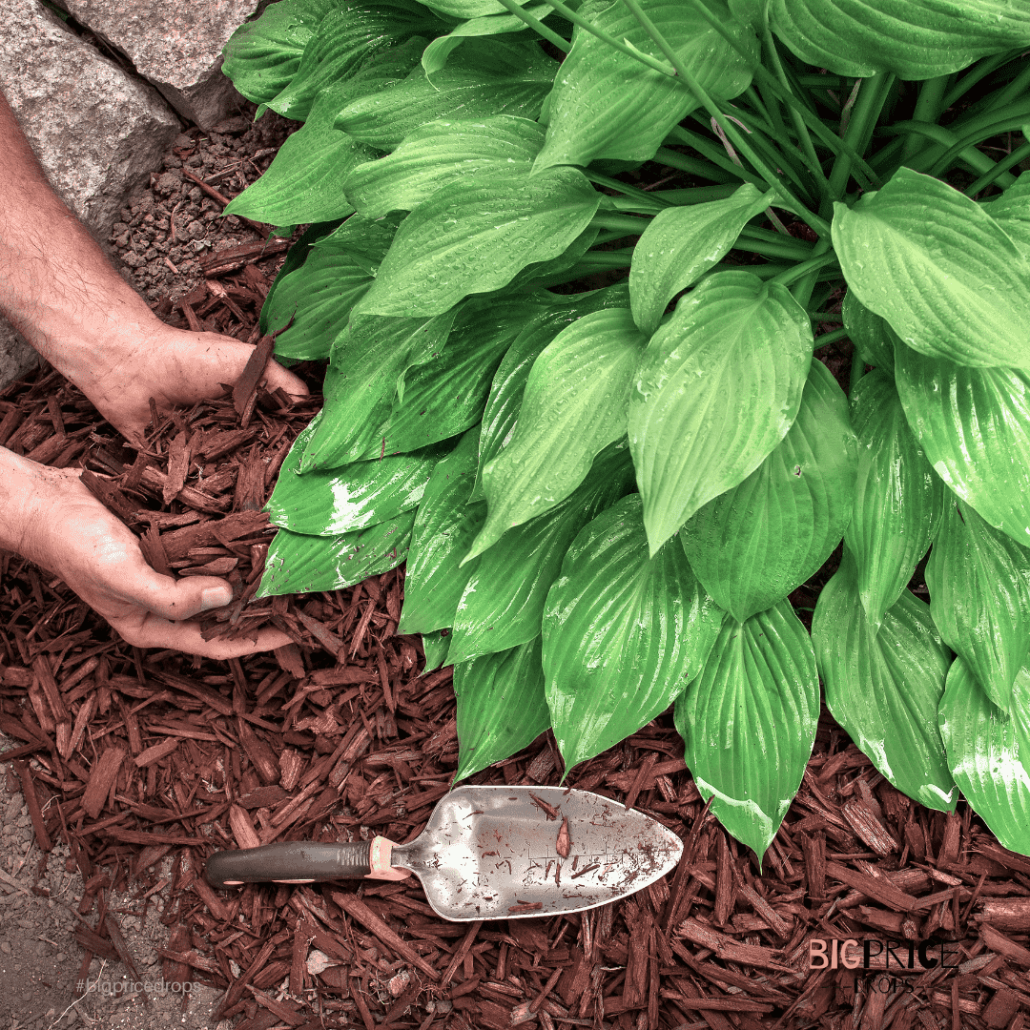
Applying organic mulch around your plants offers several benefits, including water conservation.
Retain moisture: Mulch acts as a protective layer, reducing evaporation and helping the soil retain moisture. This means you can water less frequently while still providing sufficient hydration.
Prevent weed growth: Mulch also suppresses weed growth by blocking sunlight from reaching weed seeds. This saves water by reducing competition but also minimises the need for manual weed removal or herbicides.
Regulate soil temperature: Mulch acts as an insulating layer, regulating soil temperature. This can be particularly beneficial during extreme weather conditions, as it protects plant roots from temperature fluctuations.
Collect Rainwater
Harvesting rainwater is an excellent way to reduce reliance on treated water and make efficient use of a natural resource. By setting up rain barrels or tanks to collect rainwater from your gutters and downspouts, you can utilise this water for various outdoor purposes.
Watering plants: The collected rainwater can be used to water your garden, providing a natural and free source of hydration for your plants.
Washing outdoor surfaces: Rainwater can be used to wash outdoor surfaces such as decks, patios, or even cars. This eliminates treated water and reduces water consumption.
Flushing toilets: In some cases, rainwater can be filtered and used for flushing toilets, further reducing your reliance on municipal water supplies.
Sweep Instead of Hosing
Cleaning outdoor areas such as driveways or patios often involves using water to remove debris. However, this can lead to significant water waste. Instead, opt for sweeping or blowing debris, as this not only saves water but also prevents pollutants from entering stormwater drains.
Use a broom: Sweep away leaves, dirt, and debris using a broom. This method is not only water-efficient but also helps keep your outdoor areas clean without excessive water usage.
Blowers: If sweeping is not practical or effective in your situation, consider using a blower that runs on electricity or rechargeable batteries. These blowers remove debris without water.
Additional Tips for Water and Money Savings
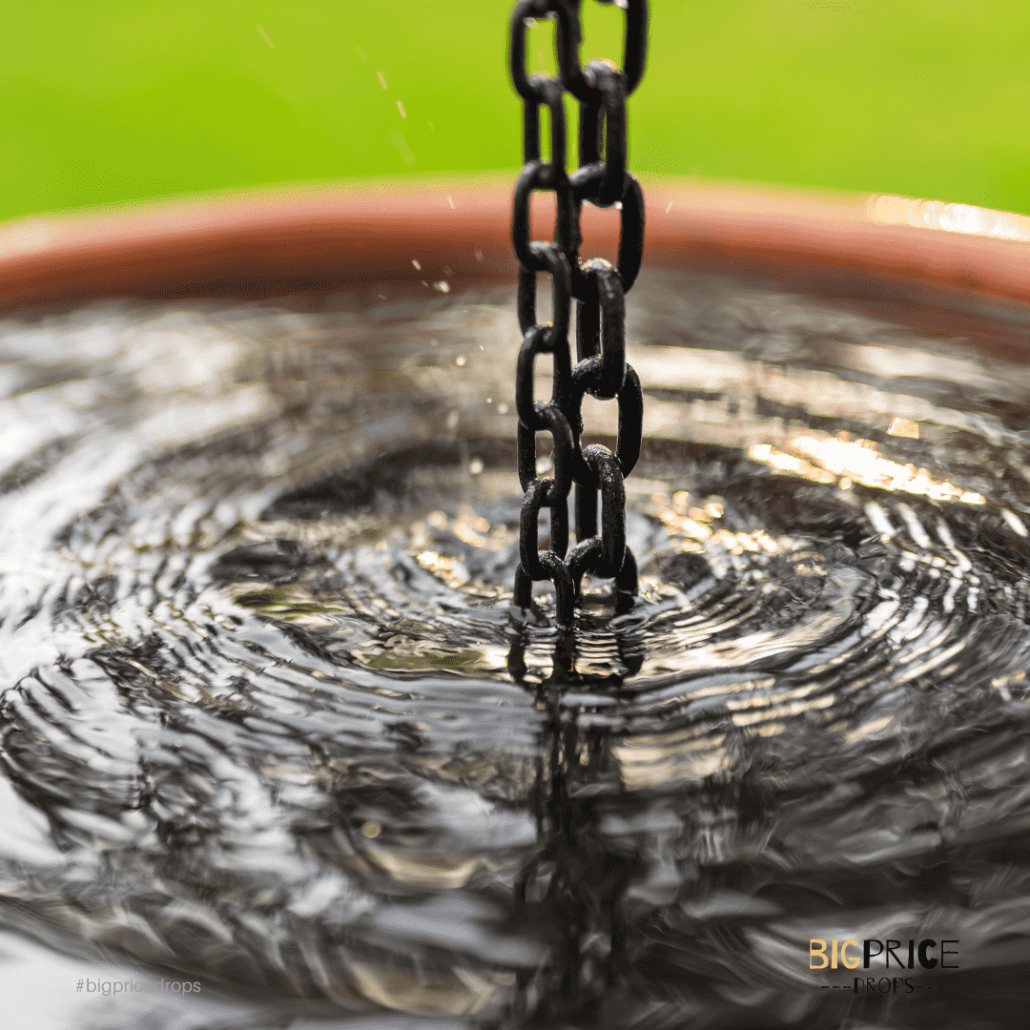
Composting food scraps can reduce the need for water to irrigate crops. – Waterwise
Monitor Your Water Bills
Keeping track of your monthly water consumption can provide valuable insights into your usage patterns. By monitoring your water bills, you can detect any unusual spikes or patterns that may indicate leaks or excessive water usage. By addressing these issues as soon as possible, you can save water and money.
Track monthly consumption: Record your monthly water usage and compare it over time. Look for any significant increases or irregularities, as this may indicate a leak or inefficient water usage.
Analyse seasonal variations: Consider seasonal variations in water usage, such as increased irrigation during the summer months. By understanding these patterns, you can identify any deviations that require attention.
Educate Your Family
Creating a culture of water conservation starts at home. Educate your family members about water conservation and involve them in adopting water-saving habits. Encourage shorter showers, turning off faucets when not in use, and overall mindful water consumption.
Family discussions: Engage in conversations about water conservation with your family members. Explain the environmental and financial benefits and encourage everyone to save water.
Set the right example: Lead by example and demonstrate water-saving practices in your daily routines. When your family sees you actively conserving water, they are more likely to follow suit.
Reuse Water
Finding ways to reuse grey-water within your household can further save water.
Rinsing water: Instead of letting the water used for rinsing fruits and vegetables go down the drain, collect it in a container and repurpose it for watering indoor or outdoor plants.
Bathwater reuse: Consider reusing bathwater for flushing toilets or watering outdoor plants. This practice conserves water and reduces water consumption.
Rainwater reuse: If you collect rainwater, explore various uses beyond watering plants. For example, you can use it to wash outdoor surfaces or non-potable household applications.
Consider Water-Efficient Appliances
When upgrading your appliances, opt for those with high energy and water efficiency ratings. By choosing water-efficient dishwashers, washing machines, and even water heaters, you can significantly reduce your household water consumption and lower your utility bills in the long run.
Energy Star certified appliances: Look for appliances labelled with the Energy Star symbol, as these have undergone rigorous testing to ensure their efficiency. Energy Star appliances often come with water-saving features and optimise resource consumption.
Water-saving dishwasher features: Some dishwashers have specific settings or features that conserve water. Look for models with half-load cycles or eco-friendly modes that use less water.
Front-loading washing machines: Front-loading washing machines are generally more water-efficient than top-loading models. They use less water per load and often have advanced features that optimise water usage based on.
Every drop counts.” – Waterwise
In conclusion, a water meter isn’t just a simple utility tool; it’s a strategic investment towards cutting your water costs. Provided you equip yourself with knowledge on optimum usage, accuracy checks, and routine maintenance, the power of savings effectively shifts into your hands. It’s both an act of environmental responsibility and financial prudence.
Save Money – Save Water

Perry Stevens is the founder of BIGPriceDrops and a long-time digital marketer with a practical interest in helping UK shoppers find better value online. He focuses on clear, no-nonsense money-saving content, Amazon UK deal insights, and buyer guides that help readers spot genuine savings without falling for misleading discounts or impulse-buy traps.
When he is not working on BIGPriceDrops, Perry runs Blend Local Search Marketing and works on digital projects covering SEO, AI tools, and online business growth. His approach is simple: help people make smarter decisions before they spend their money.


Leave a Reply
Want to join the discussion?Feel free to contribute!